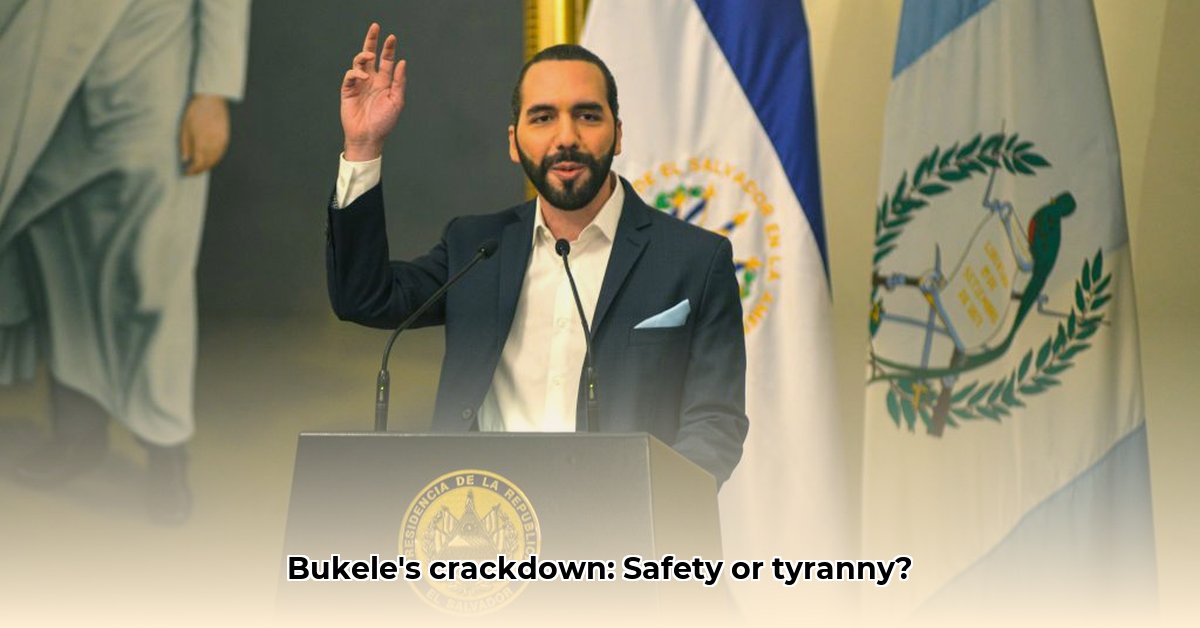
President Bukele's El Salvador: A Nation's Balancing Act
El Salvador under President Nayib Bukele presents a stark paradox: a dramatic reduction in violent crime juxtaposed against serious concerns regarding human rights and democratic backsliding. This complex situation demands careful analysis, weighing the tangible improvements in security against the potential erosion of fundamental freedoms. The narrative is multifaceted, requiring a balanced assessment to fully comprehend its implications.
A Stunning Crime Drop: An Unprecedented Shift
El Salvador's murder rate, once among the highest globally, has plummeted under Bukele's administration. Figures from 2019, showing nearly 40 murders per 100,000 inhabitants, contrast sharply with the drastically reduced rates observed in 2024, hovering near two per 100,000. This unprecedented decrease bolsters Bukele's popularity, often exceeding 90% approval ratings. The tangible impact on daily life is undeniable; El Salvadorians report feeling safer, businesses are thriving, and a sense of renewed normalcy has returned to many communities. However, this extraordinary success raises crucial questions regarding the methods employed and their long-term consequences. Is this perceived success truly sustainable?
The "Iron Fist" Approach: Security Measures and Human Rights Concerns
Bukele's strategy has involved a comprehensive crackdown on gangs, resulting in over 85,000 arrests by the end of 2024. While directly linked to the crime reduction, this approach has drawn significant criticism from human rights organizations. Reports from Amnesty International and Human Rights Watch detail widespread allegations of human rights abuses, including arbitrary detentions, lack of due process, and extrajudicial killings. The government’s implementation of a state of emergency further exacerbates these concerns. "The sheer scale of arrests is deeply concerning," states Ana Lucia Hernandez, a human rights lawyer at the Cristosal Foundation, echoing the concerns of numerous international human rights observers. While some argue that drastic measures were necessary to curb pervasive violence, the potential costs to democratic principles and fundamental rights are undeniably significant.
Beyond Statistics: The Human Cost and Erosion of Institutional Integrity
The human cost of Bukele's policies extends beyond the statistics. Families are shattered, accusations fly unchecked, and the stories of alleged injustice contribute to a climate of fear and uncertainty. The alleged targeting of journalists and the erosion of judicial independence have further fuelled concerns about the long-term implications of the government's approach. The suppression of dissent creates a chilling effect, preventing critical oversight and fostering a culture of impunity. Is a temporary increase in security worth the potential collapse of democratic institutions?
International Relations and Economic Policy: Unconventional Approaches
Bukele's unconventional economic policies, including the adoption of Bitcoin as legal tender, have also attracted considerable attention. While initially hailed as innovative, the experiment's impact has been mixed, raising questions about its long-term economic consequences. His close relationship with former US President Donald Trump has further complicated El Salvador's international standing, potentially influencing the response of the international community to human rights concerns. This intricate web of domestic and foreign policy choices requires nuanced analysis, considering not only their immediate impact but also their long-term implications.
A Nation at a Crossroads: Weighing Security and Justice
El Salvador finds itself at a critical juncture. While the reduction in crime is a remarkable achievement, it's crucial to consider the broader implications of Bukele's policies. The trade-off between security and democracy has become a central theme in the global conversation surrounding El Salvador. Maintaining a sustainable balance between public safety and respect for human rights is a central challenge that must be addressed. The debate extends beyond the immediate facts and figures, forcing a crucial conversation about the ethical considerations involved in prioritising one value over another. The long-term consequences of these choices will shape El Salvador's trajectory for decades to come.